0%

Which 2026 Top Automatic Tea Bag Packaging Machine Is Best? This question reflects a changing production floor. Tea brands now demand higher output, cleaner sealing, accurate dosing, and less material waste. An Automatic Tea Bag Packaging Machine must handle these pressures without damaging delicate leaves or creating uneven sachets.

PMMI’s 2024 packaging automation research highlights stronger investment in smart controls, connected equipment, and flexible production lines. Smithers’ global packaging studies also identify efficiency, traceability, and sustainable material use as major purchasing factors. These findings matter because tea packaging is rarely a simple operation. A single line may measure tea, form filter paper, attach thread and tags, seal envelopes, and count finished bags. Small calibration errors can quickly become expensive product losses.

Jorge Izquierdo, PMMI’s former vice president of market development, has stated, “Automation must be designed around the process, not added as an afterthought.” That principle deserves attention here. The fastest machine may not be the best machine. A slower line with stable dosing, gentle product handling, and quick format changes may deliver better long-term value. It depends on the factory.

This guide compares leading 2026 models through practical criteria, including bags per minute, sealing consistency, changeover time, sensor performance, maintenance access, and after-sales support. It also considers real operating details, such as tea dust around forming shoulders and film tension during continuous production. No machine is perfect. Some specifications look impressive on paper but weaken under demanding conditions. Buyers should verify test results, warranty terms, and compatibility with their actual tea blends before making a decision.
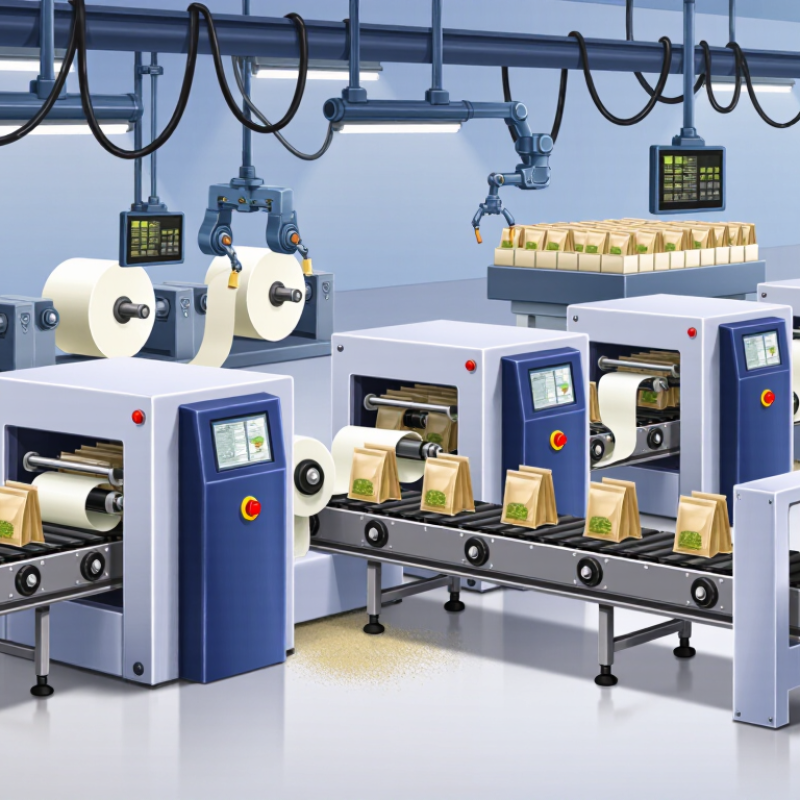
Which 2026 Top Automatic Tea Bag Packaging Machine Is Best?

What Is an Automatic Tea Bag Packaging Machine?

An automatic tea bag packaging machine is an integrated system that measures tea, forms filter paper, seals the bag, and cuts each packet. Many models also attach a string and tag, then place the tea bag inside an outer envelope. The process looks simple, but accuracy depends on several coordinated actions. A dosing unit controls the tea quantity. Servo-driven parts guide the paper. Heat-sealing jaws close the edges without crushing the leaves.

In practical production, operators watch more than the machine’s speed. They check tea moisture, particle size, seal temperature, and paper tension during each shift. Small errors matter. A loose seal can cause leakage, while excessive heat may damage the filter paper.

Modern systems often use sensors and programmable controls to detect missing tags, poor seals, or irregular filling. These features reduce waste, but they do not replace careful setup.

No machine is truly hands-off. A clean forming area and regular calibration remain essential. I have seen fast equipment perform poorly when the tea blend changed without adjusting the dosing settings. The best 2026 machine should match the product, package style, daily output, and available technical support. Buyers should request sample tests using their own tea. A specification sheet can hide practical weaknesses. Operators need clear controls, safe access, and straightforward maintenance procedures. It is not magic. Reliable results come from suitable engineering and disciplined handling.

How Do Automatic Tea Bag Packaging Machines Work?

An automatic tea bag packaging machine turns loose tea into measured, sealed units through a linked sequence. The operator loads filter paper, thread, tags, and outer-film rolls into separate holders. A volumetric dosing cup measures each portion. Some machines use weighing systems for better control with irregular leaves.

The filter paper moves forward in timed steps. A forming collar shapes it into a narrow tube. The dosing unit drops tea into each pocket, while heat seals close the edges. A cutting blade separates the bags at fixed intervals. Thread and tags may be attached during sealing, depending on the machine design. Sensors check paper position, film tension, and missing materials. Small errors grow quickly.

For outer packaging, the sealed tea bag enters an envelope-forming section. Film folds around it, then heated jaws create clean end seals. A conveyor carries finished sachets to collection or carton packing. Operators should check seal strength, fill weight, and tea dust around the sealing area. Clean surfaces matter. Moisture can affect paper movement and sealing quality.

In practical production, the best machine is not always the fastest one. A high-speed setting can increase rejects when tea leaves vary in size. I have found that stable dosing often matters more than impressive output claims. Regular calibration, careful temperature checks, and gentle material handling improve consistency. Even experienced operators need to adjust tension after changing film or filter paper. That adjustment is easy to underestimate.

Which Features Define the Best 2026 Tea Bag Packaging Machine?

Choosing the best 2026 automatic tea bag packaging machine starts with measurable features, not attractive promises. In daily production, dosing accuracy, seal consistency, and stable speed matter most. A reliable machine should handle different tea textures without crushing leaves or creating uneven fills. It should provide clear controls, quick format changes, and accessible cleaning points. Operators need to understand alarms immediately. Confusing screens cause expensive pauses.

The strongest systems connect weighing, bag forming, thread attachment, envelope sealing, and date coding in one controlled workflow. Look for food-contact materials, guarded moving parts, and documented maintenance procedures. Data logging can reveal fill-weight drift before rejected cartons increase. Noise, dust, and heat deserve attention too. These details affect workers and product quality. Still, no machine fits every factory perfectly. A fast model may waste material during small batches. That trade-off is easy to miss.

Tips: Test the machine with your actual tea leaves, filter paper, and target bag size. Request a long production trial, not only a showroom demonstration. Check changeover time with a new operator. Review spare-part availability, training quality, and service response commitments. Measure seal strength, weight variation, and downtime across several shifts. Keep independent records. They expose weak assumptions.

Which 2026 Top Automatic Tea Bag Packaging Machine Is Best? - Which Features Define the Best 2026 Tea Bag Packaging Machine?

Evaluation Dimension High-Speed Double-Chamber System Premium Pyramid Tea Bag System Integrated Inner-and-Outer Wrapper System Flexible Multi-Format System
Best Overall Use Case High-volume standard tea production Premium loose-leaf and herbal tea products Retail products requiring individual aroma protection Factories handling several bag shapes and pack formats
Typical Output Range 100–220 tea bags per minute 60–140 tea bags per minute 40–100 finished packs per minute 50–160 finished packs per minute
Supported Tea Bag Style Flat, rectangular, heat-sealed or staple-free bags Pyramid or triangular bags Flat or pyramid bags with individual outer envelopes Flat, round, pyramid, and selected specialty formats
Typical Dosing Range 1.5–6 g per bag 2–8 g per bag 1.5–6 g per inner bag 1.5–10 g per bag, depending on product density
Filter Material Compatibility Heat-sealable filter paper and selected nonwoven materials Heat-sealable mesh, biodegradable mesh, and filter materials approved for pyramid forming Filter paper or mesh plus heat-sealable envelope film Multiple filter and wrapping materials, subject to sealing tests
Outer Packaging Options Optional carton, pouch, or bulk collection Individual envelope, carton, or display pouch Individually sealed envelope with carton or case packing Carton, pouch, envelope, or multipack configurations
Sealing Control Temperature and pressure adjustment with sealing-jaw monitoring Servo-controlled forming and heat-sealing parameters Separate inner-bag and envelope sealing controls Recipe-based control for different materials and formats
Weighing Accuracy Commonly within approximately ±0.1–0.3 g, depending on tea density Commonly within approximately ±0.1–0.3 g, depending on particle size Commonly within approximately ±0.1–0.3 g, with additional wrapper control Approximately ±0.1–0.5 g, depending on the dosing system and product
Automation Level Automatic feeding, dosing, sealing, cutting, counting, and discharge Automatic dosing, pyramid forming, sealing, tagging, and discharge Automatic bag making, envelope wrapping, coding, inspection, and collection Automatic format changeover supported by programmable recipes
Changeover Time Approximately 20–45 minutes for similar products Approximately 30–60 minutes, depending on bag size and mesh Approximately 30–75 minutes for film and carton changes Approximately 20–60 minutes with standardized tooling
Quality Inspection Features No-bag-no-seal, missing-tag detection, and basic seal monitoring Shape detection, missing-tag detection, and seal-integrity monitoring Print registration, envelope presence, seal inspection, and reject handling Vision inspection and recipe-based rejection for multiple formats
Food-Contact Design Stainless-steel product-contact areas and cleanable surfaces Stainless-steel construction with accessible forming and dosing areas Hygienic product path with separated film and tea-contact zones Modular food-contact components designed for routine sanitation
Recommended Air Supply Typically 0.6–0.8 MPa clean, dry compressed air Typically 0.6–0.8 MPa clean, dry compressed air Typically 0.6–0.8 MPa clean, dry compressed air Typically 0.6–0.8 MPa, depending on installed modules
Typical Installed Power Approximately 3–8 kW Approximately 4–10 kW Approximately 6–15 kW Approximately 5–15 kW, depending on configuration
Operator Requirement Usually one trained operator per production line Usually one trained operator, with additional setup support Usually one to two operators for wrapper and carton operations Usually one to two trained operators during product changeovers
Main Advantage Highest throughput for standardized tea bag products Premium presentation and larger infusion space Strong aroma, moisture, and contamination protection Best flexibility for varied product portfolios
Main Limitation Less suitable for large-leaf blends and frequent format changes Usually higher material cost and lower maximum speed Higher equipment complexity, footprint, and operating cost Higher purchase cost and more demanding setup procedures
Best Selection Priority Choose when output volume and low unit cost are the main goals Choose when appearance, infusion, and premium positioning matter most Choose when shelf life and individual protection are critical Choose when flexibility and future product expansion are priorities

Note: The figures shown are representative industry ranges for automatic tea bag packaging equipment. Actual speed, dosing accuracy, power consumption, and changeover time depend on tea particle size, moisture, bag dimensions, packaging materials, machine configuration, and production conditions.

How to Compare Machine Types, Capacity, and Packaging Materials

Choosing the best automatic tea bag packaging machine in 2026 depends on your product, not its advertised speed. Flat tea bag machines suit standard filter paper and string tags. Pyramid machines create more space for whole-leaf blends, but they often require tighter material control. Some systems pack inner bags, outer envelopes, or both. Each type creates different maintenance demands and changeover times.

Capacity must be measured in usable output, not only bags per minute. A machine rated at 180 bags per minute may deliver less after film changes, cleaning, and minor stoppages. Ask for trial data using your actual tea blend. Fine dust can affect sealing and filling accuracy. Moisture can create uneven weights. Check hopper size, dosing accuracy, reject handling, and operator access. A fast machine is not always the most productive choice.

Tips: Compare three capacity levels. Test every packaging material. Confirm food-contact documentation and seal strength before purchase. Heat-sealable filter paper, nylon mesh, PLA-based mesh, and laminated envelope films behave differently. Review temperature ranges, film thickness, and roll width requirements. I would also calculate changeover time across a full week. This is where early estimates can fail. A cheaper machine may become expensive when one format change takes forty minutes. Leave room for imperfect batches and real production conditions.

Which 2026 Top Automatic Tea Bag Packaging Machine Is Best?

Comparison of typical production capacity by machine type, with suitable tea bag packaging materials.

Filter Paper Machines

Suitable for heat-sealable filter paper, string, tag, and single-chamber tea bags. They typically provide the highest output for standard tea bag formats.

Pyramid Tea Bag Machines

Designed for mesh materials such as biodegradable PLA or nylon. They usually run slower because of larger bag volume and more complex forming.

Envelope Packing Machines

Add individual outer envelopes made from paper, laminated paper, or composite film, improving protection and shelf presentation.

Capacity figures show typical operating ranges in bags per minute for commercial automatic equipment. Actual performance depends on tea particle size, fill weight, sealing method, material specifications, and operator settings.

How to Choose the Right Automatic Tea Bag Packaging Machine

Choosing the Right Automatic Tea Bag Packaging Machine in 2026

Selecting an automatic tea bag packaging machine should begin with the tea, not the advertised speed. Fine dust, broken leaves, herbal blends, and whole-leaf products flow differently. I have seen machines perform well in trials but struggle after a blend changed. That detail matters.

Check the dosing system first. It should handle your target weight without excessive waste or uneven bags. Ask for production tests using your actual tea, filter paper, thread, tag, and outer envelope. A machine rated for 120 bags per minute may run slower with delicate materials. Faster is not always better.

Examine sealing temperature control and sensor accuracy. Stable settings reduce open edges, scorched paper, and rejected packs. The frame should allow easy cleaning around the hopper and forming area. Dust collects quickly there. Changeover time also deserves attention. If operators need complicated tools, small product changes can become expensive delays.

Review the control panel, alarm records, spare-part access, and operator training. A clear manual is useful, but practical training is better. Confirm electrical requirements and available service support before signing anything. My first equipment shortlist focused too heavily on output. That was a mistake. Maintenance access and consistent dosing proved more important during daily use. Leave room for uncertainty, because laboratory performance may not match a busy production floor.

FAQS

Which features matter most in a 2026 tea bag packaging machine?

Dosing accuracy, stable sealing, and dependable speed matter most. Clear controls and accessible cleaning points reduce avoidable stoppages. Strong machines also connect weighing, bag forming, thread attachment, envelope sealing, and date coding.

Can one machine handle different tea textures?

It depends on the dosing system and product testing. Fine dust, broken leaves, herbal blends, and whole leaves flow differently. Test your actual tea before deciding. Results may change later.

Why should production tests use actual materials?

Tea leaves, filter paper, thread, tags, and envelopes affect machine performance. A showroom test may hide uneven filling or material waste. Test real materials. It is more revealing.

Is the highest bag speed always the best choice?

No. A machine rated for high output may run slower with delicate tea or small batches. Excessive speed can increase waste and unstable fills. Speed can mislead.

How should dosing accuracy be evaluated?

Measure target weight, weight variation, and material waste across several shifts. Watch for fill-weight drift before rejected cartons increase. Keep independent records. They challenge optimistic assumptions.

What sealing features deserve close attention?

Check temperature control, sensor accuracy, and seal strength. Stable settings help prevent open edges, scorched paper, and rejected packs. Inspect sealing results repeatedly, not once.

How important are cleaning and changeover procedures?

They are highly important during daily production. Dust collects around the hopper and forming area. Easy access shortens cleaning time. Complicated tools create expensive delays.

What should operators examine on the control panel?

Alarms should be clear and immediately understandable. The system should record faults and operating data. Confusing screens can stop production unnecessarily. That weakness is easy to overlook.

What should be reviewed before purchasing the machine?

Review electrical requirements, spare-part access, training quality, and service response commitments. Request a long production trial with a new operator. Laboratory performance may not match a busy factory floor.

Which mistake commonly affects machine selection?

Focusing too heavily on advertised output is a common mistake. Maintenance access and consistent dosing may matter more after installation. I made that assumption once. It needed reconsideration.

Conclusion

Choosing the best 2026 Automatic Tea Bag Packaging Machine requires more than comparing speed alone. These machines are designed to measure tea, form filter bags, add strings or tags when needed, seal the packages, and prepare them for outer wrapping or final packing. Their automated processes can improve consistency, reduce material waste, and support efficient production with less manual handling.

The ideal machine should match the tea product, packaging format, production volume, and available materials. Important features include accurate dosing, stable sealing, user-friendly controls, quick changeover, reliable safety systems, and compatibility with different filter papers and wrapping materials. Buyers should also compare machine types by capacity, footprint, maintenance requirements, and long-term operating costs. By evaluating these factors together, producers can select an Automatic Tea Bag Packaging Machine that delivers dependable performance, flexible packaging options, and an efficient solution for future production needs.

Elara

Elara

Elara is a professional marketing specialist dedicated to helping businesses understand products, markets, and customers through clear, practical, and insight-driven communication. With extensive knowledge of the company’s solutions, she translates complex features and industry trends into useful......