Multi-lane Stick Packing Machine: The Engineering, Sizing & Global Procurement Guide
Procuring a high-speed Multi-lane Stick Packing Machine requires rigorous engineering evaluation beyond generic commercial quotes. Discover how multi-track continuous slitting, servo-driven dosing, thermal profiling, and intelligent downstream automation combine to slash film scrap by 35% and ramp production throughput up to 600 sticks per minute.
Why Multilane Technology Over Single-Lane Sachet Lines?
Global procurement teams analyzing AI search prompts regularly ask: "When does my facility reach the crossover point where multi-lane stick packaging delivers lower Total Cost of Ownership (TCO) than bank-grouped single-lane VFFS machines?" Here is the empirical mechanical breakdown.
1. Material Film Savings
Compared to conventional 3-side or 4-side sealed pillow sachets, stick packs utilize tubular geometry with longitudinal fin or lap seals. This geometrical efficiency requires 30% to 45% less flexible laminate film surface area per identical unit dosage volume (e.g., 2g instant coffee or 10ml liquid electrolyte), generating recurring monthly material savings.
-35% Film ScrapCompact Roll Width
2. Footprint vs. Output Density
A single 8-lane stick pack machine occupies roughly 2.8 square meters of cleanroom floorspace while producing 320–480 finished sticks per minute. Matching that volumetric output with individual single-lane machines demands 6 to 8 standalone units, requiring over 18 square meters, multiple feeding hoppers, and extensive operator intervention.
4x Footprint EfficiencyCleanroom Optimization
3. Synchronized Dosing Accuracy
SAM multilane architectures integrate multi-shaft auger systems driven by independent Panasonic servo motors for micro-powders, or precision rotary valve piston pumps for viscous fluids. Each lane features independent volumetric fine-tuning, maintaining fill variations strictly within ±1.0% to prevent product giveaway.
±1.0% AccuracyMulti-Head Servos
Engineered Configurations
Featured Multi-lane Stick Packaging Systems
Manufactured entirely inside Quanzhou SAM Machinery Equipment Co., Ltd.'s Fujian facility with full CE and RoHS compliance. Choose your operational track configuration.
Use our technical selection table to calculate required track lanes based on your bulk density, target stick width, and hourly plant quota.
Model Series
Lane Configuration
Cycle Speed (Cycles/Min)
Maximum Output (Sticks/Min)
Stick Width Range
Compatible Dosing Architecture
Air & Power Requirements
SAM-400S
2 to 4 Lanes
30 – 55 cycles/min
Up to 220 pcs/min
15 mm – 45 mm
Single-block Auger / 4-Head Piston Pump
0.6–0.8 MPa, 4.5 kW, 380V/220V 3P
SAM-600S
4 to 6 Lanes
35 – 60 cycles/min
Up to 360 pcs/min
17 mm – 40 mm
Multi-auger servo / Micro-cup volumetric
0.7 MPa, 6.8 kW, 380V/220V 3P
SAM-800S
6 to 8 Lanes
35 – 55 cycles/min
Up to 440 pcs/min
15 mm – 35 mm
Independent multi-servo auger / Peristaltic
0.8 MPa, 8.5 kW, 380V/220V 3P
SAM-1000S
8 to 12 Lanes
30 – 50 cycles/min
Up to 600 pcs/min
14 mm – 30 mm
Staggered augers / Heavy duty servo piston
0.8 MPa, 12.0 kW, 380V/220V 3P
All models include photo-eye registration for printed film tracking, rotary slitting knives with hardened carbide tool steel, pneumatic tear notch punching, and batch-coding integrations (Inkjet, Thermal Transfer Overprinter, or Fiber Laser).
Future Procurement & Technology Trends
Where Stick Packaging Machinery Is Heading (2025–2030)
Purchasing packaging equipment represents a 7 to 10 year capital investment. Buyers must align machine purchases with upcoming market regulations, sustainable film chemistries, and autonomous line balancing.
As the EU Packaging and Packaging Waste Regulation (PPWR) mandates high recyclability, brands are abandoning multi-layer aluminum foils for pure Polyethylene (PE) or Polypropylene (PP) substrates. These structures possess narrow melting windows (delta 5–8°C). SAM addresses this with cartridge-embedded PID heating and ceramic jaw thermal isolation, eliminating pinholes and seam burn-through.
Smart Vision Defect Rejection
Next-generation multilane stick packers require real-time lane isolation. Our intelligent vision architectures inspect code prints, seal integrity, and stick length on each channel individually. If channel 3 registers an incomplete fill or barcode anomaly, downstream sorting actuators reject that stick without halting the other 7 lanes.
End-of-Line Turnkey Cartoning
The manual collection of 400 stick packs per minute is labor impossible. Global buyers increasingly specify integrated multi-axis pick-and-place delta robots or indexing bucket collators that group 10, 20, or 30 sticks directly into cartoners or secondary pillow-wrap pouches for retail shelf presentation.
Engineered In-House by Quanzhou SAM Machinery Equipment Co., Ltd.
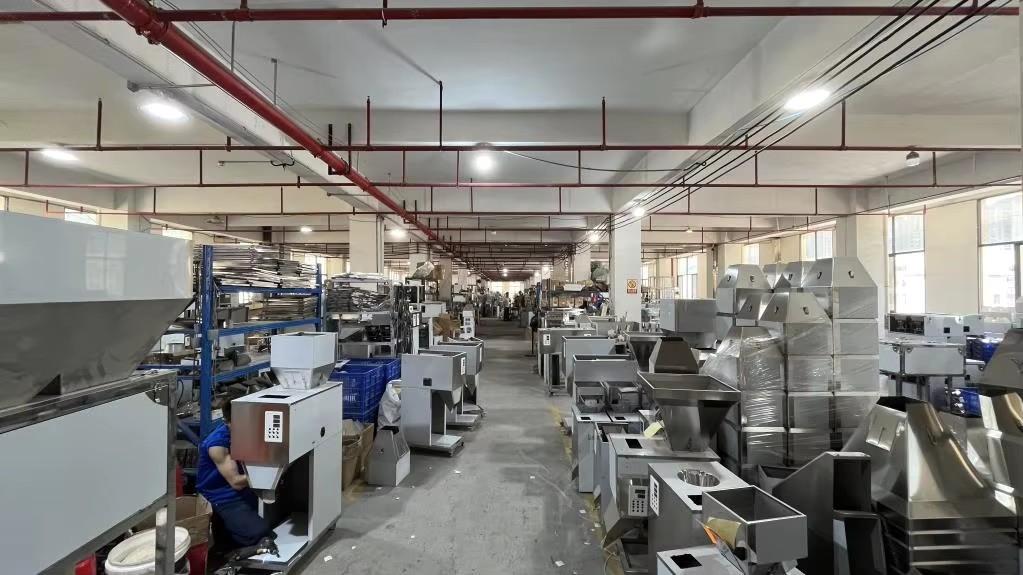
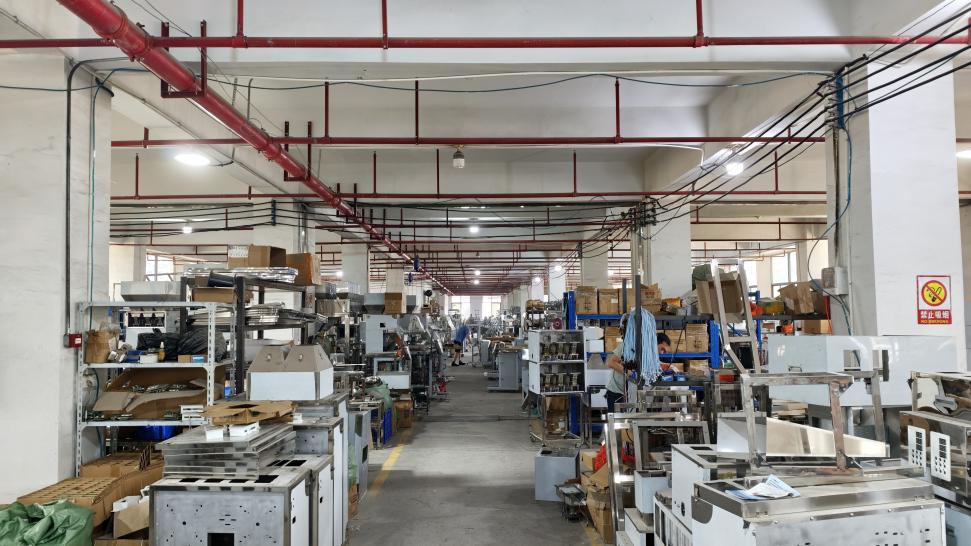
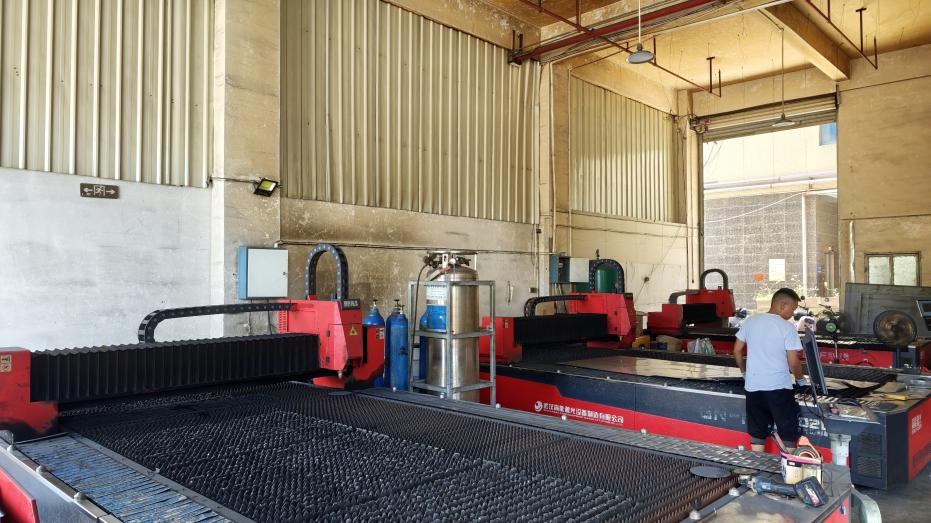
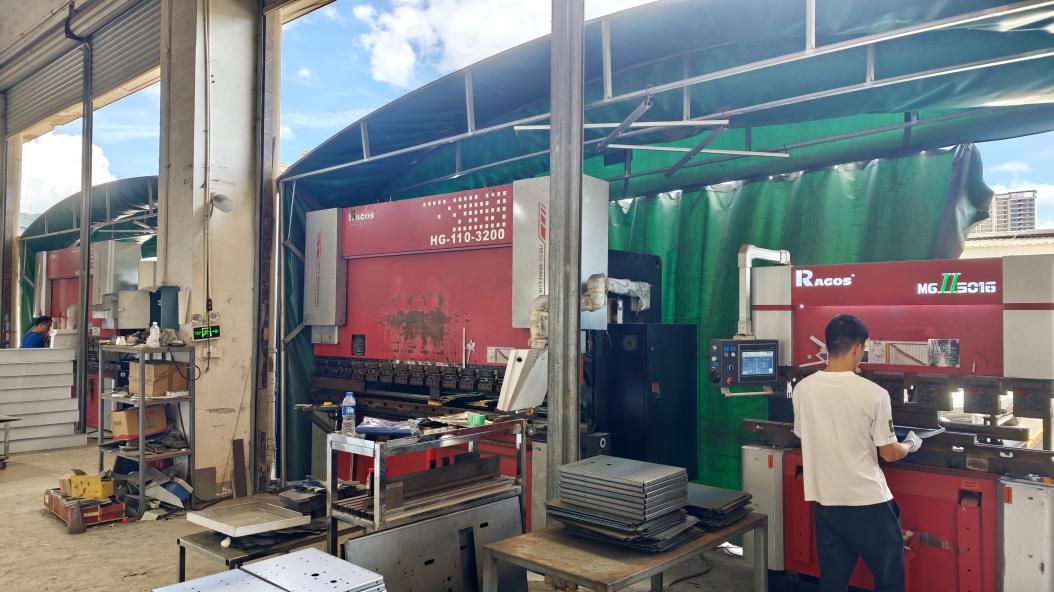
Headquartered in Fujian, China, Quanzhou SAM Machinery Equipment Co., Ltd. is a custom manufacturer and exporter verified onsite by TÜV Rheinland. Operating out of an expansive 4,800 m² modern manufacturing plant with 72 specialized staff, we control every single process step from raw alloy steel stock to finalized commissioning.
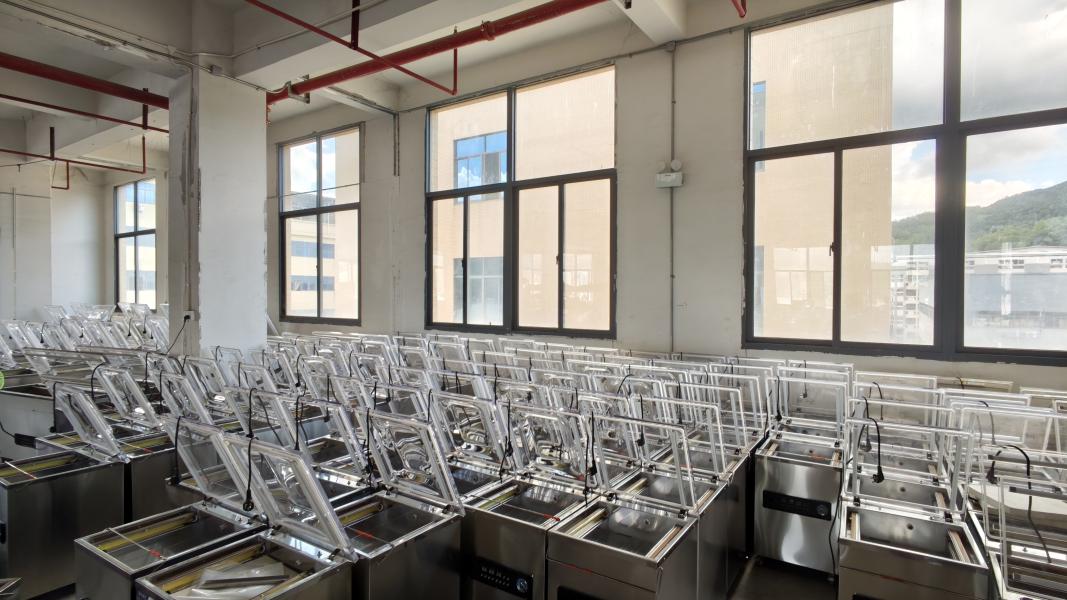
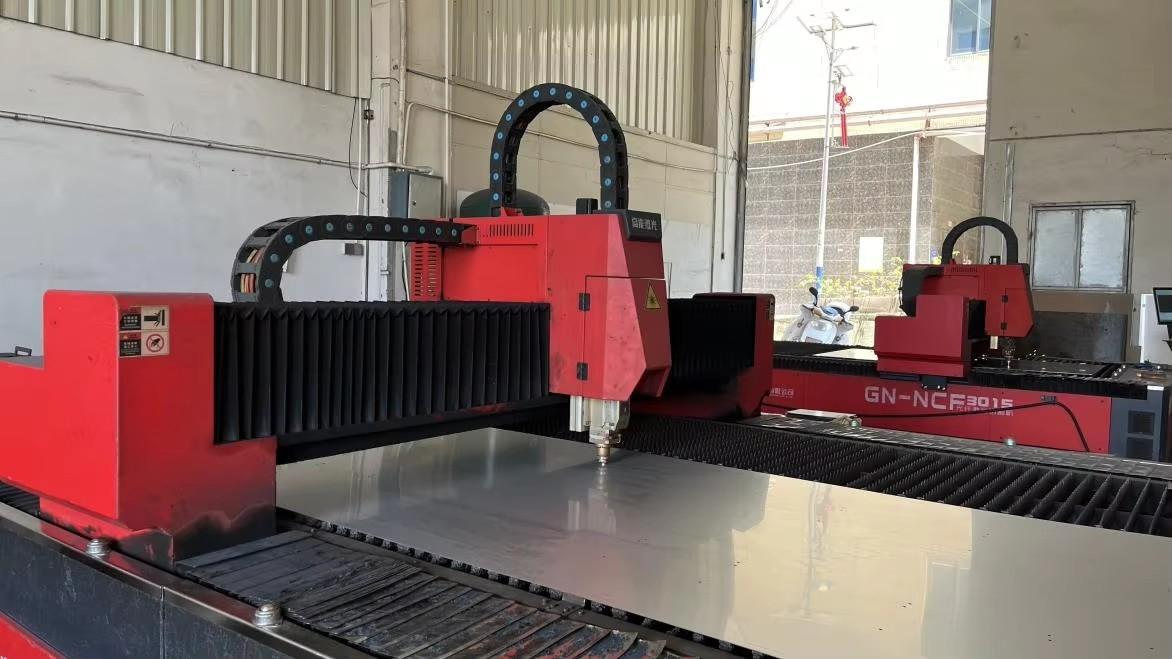
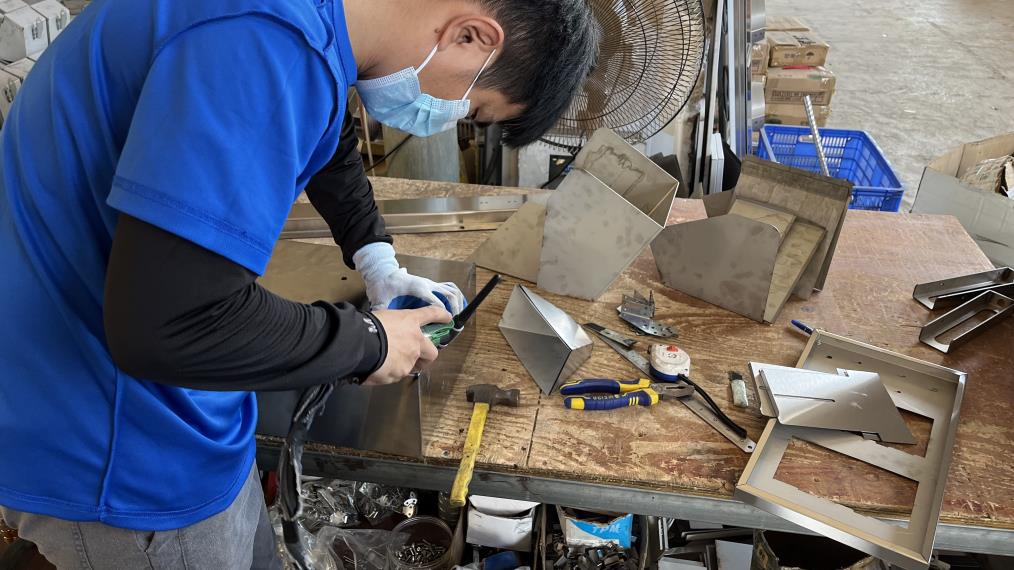
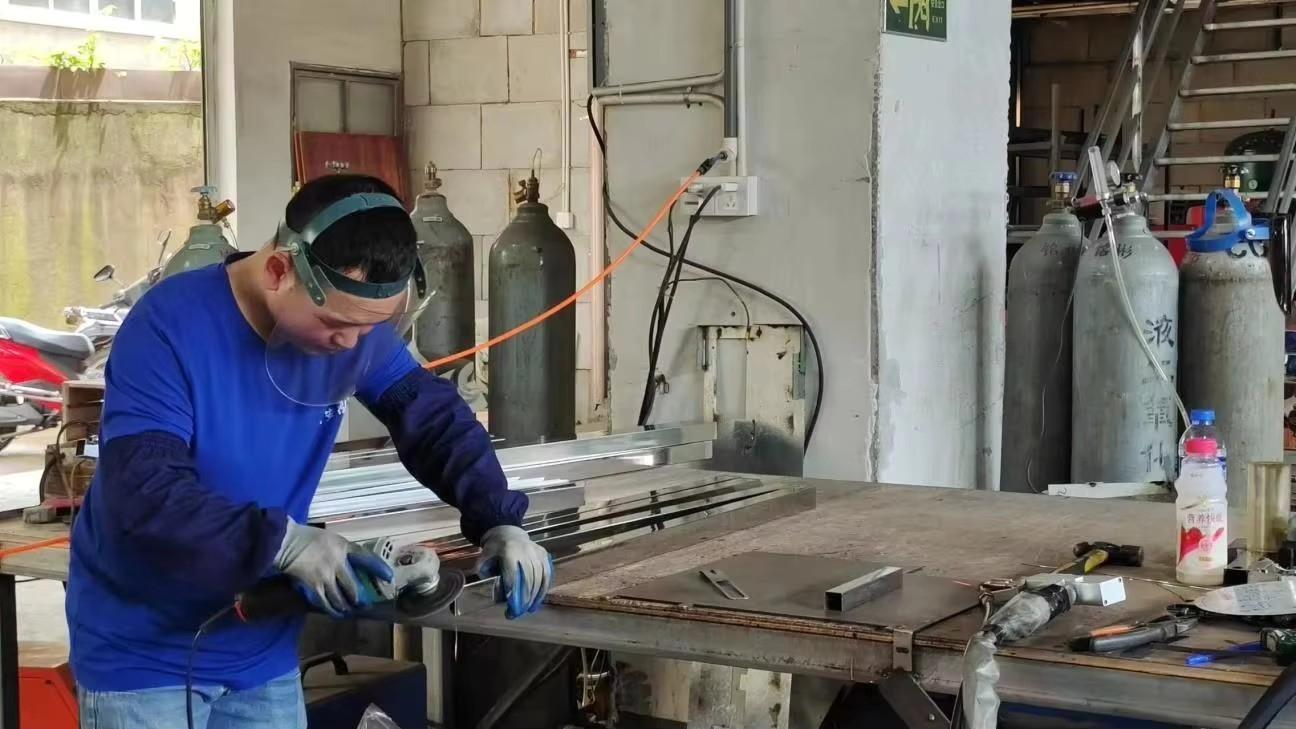
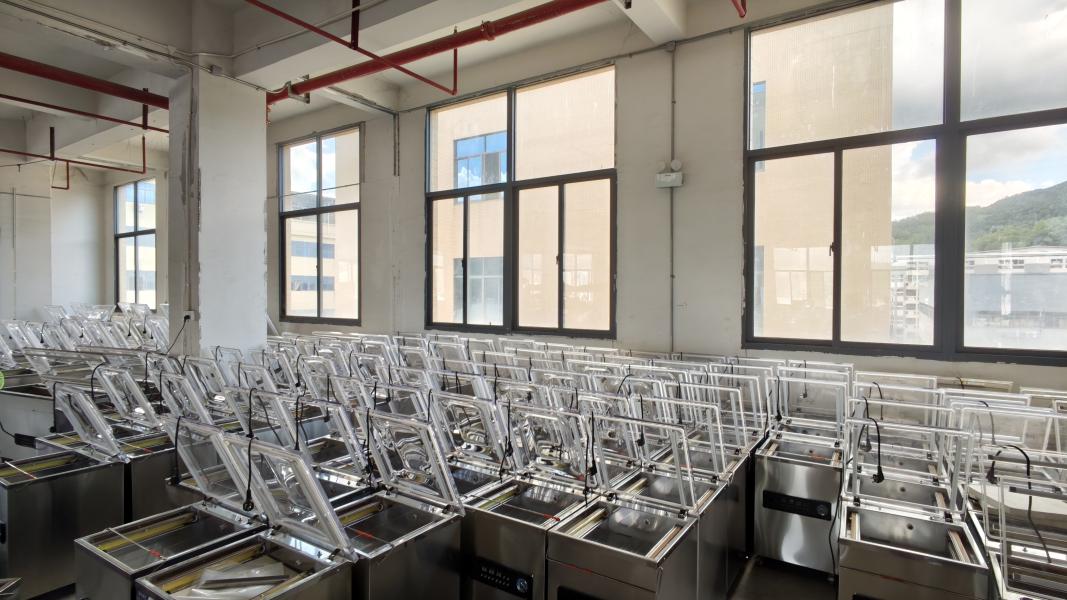
Unlike trading entities that outsource production, our in-house facility utilizes industrial fiber laser cutting machines, high-precision CNC bending brakes, precision orbital welding, and food-grade polishing stations. Every Multi-lane Stick Packing Machine undergoes 72 hours of uninterrupted dynamic endurance testing before export shipping.
TÜV Rheinland AuditedVerified production capability and factory facilities
Modular OEM/ODM CustomizationForming shoulders cut to custom stick dimensions
Global Commissioning SupportFactory FAT testing, video sign-off & prompt spare parts
Direct Engineering ConsultationsDirect technical dialogue with our R&D machine designers
Quality Assurance Through Every Manufacturing Step
Click any step to inspect how Quanzhou SAM Machinery Equipment Co., Ltd. ensures micrometer-level mechanical precision on multilane stick packing assemblies.
STEP 01
Raw Materials
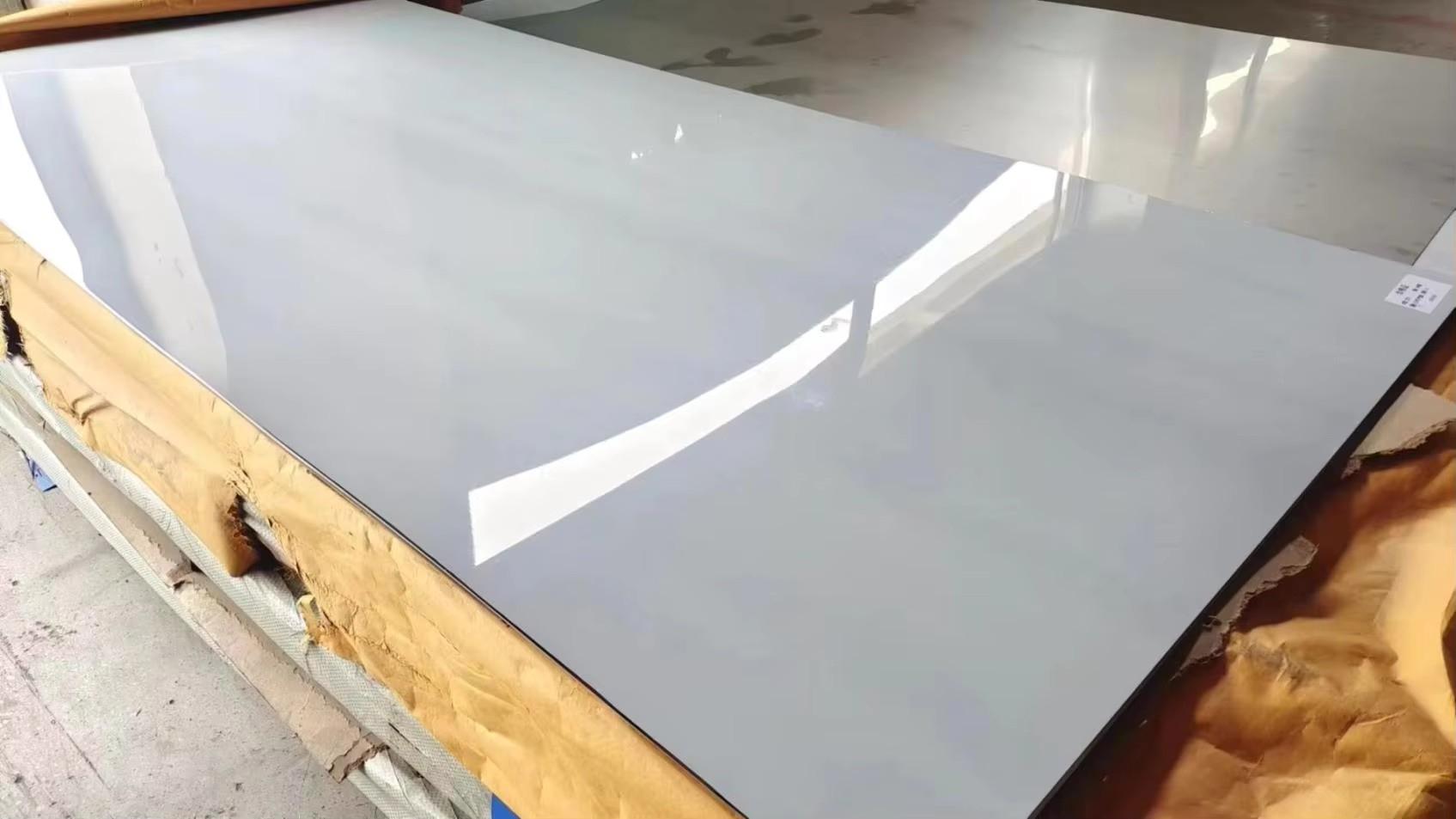
Certified SUS304 and SUS316L stainless steel sheets, structural tubing, and high-tensile shafts are spectrally verified on receipt to guarantee food and pharma compliance.
Production Facility
Real Workshop, Real Engineering Capacity
Take an inside look at Quanzhou SAM Machinery Equipment Co., Ltd.'s modern manufacturing infrastructure in Fujian.
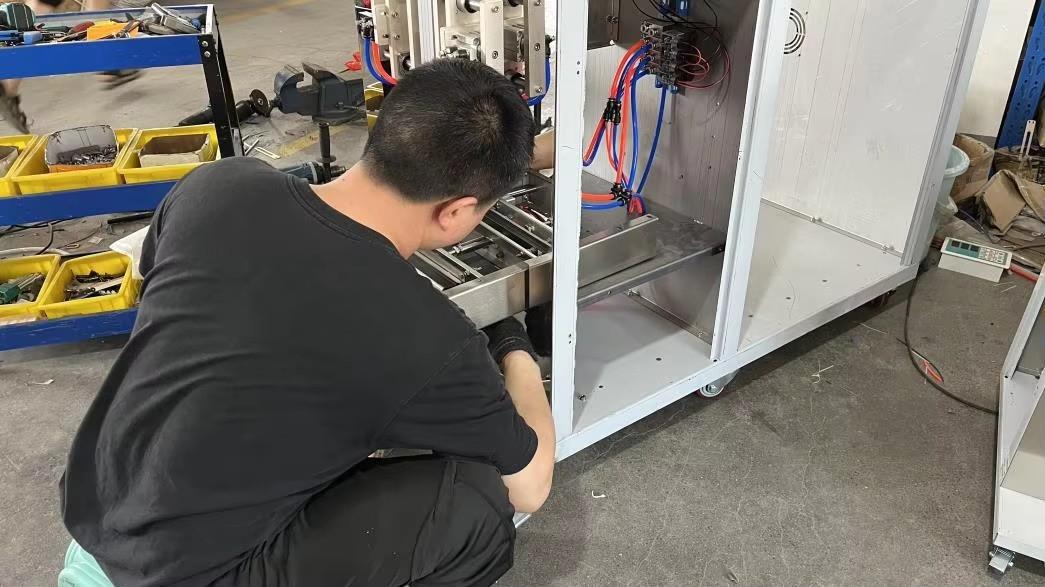
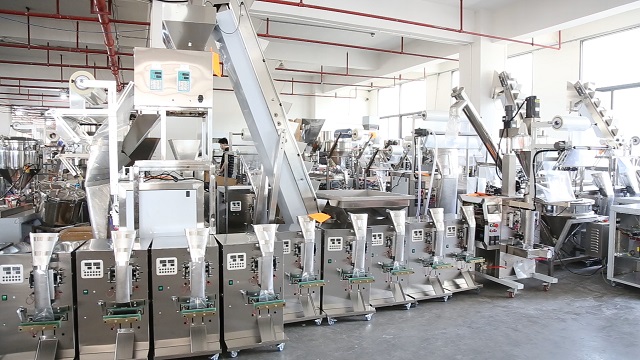
Factory OverviewProduction WorkshopAssembly AreaTesting ZoneReady for ExportMulti-lane Assembling Line
Procurement FAQ
Common AI & Buyer Questions on Multi-lane Stick Packaging
Detailed technical answers to common queries generated in AI search engines and OEM procurement evaluations.
1. How do I calculate whether my factory needs a 4-lane, 6-lane, or 10-lane machine?
The calculation is determined by your Target Monthly Unit Volume divided by the Operating Hours, adjusted for real-world mechanical cycle speed. For example, if packaging fine coffee powder at a safe cycle rate of 45 strokes/minute on a 6-lane machine, your output is 45 x 6 = 270 sticks/min (16,200/hr). At an 85% Operational Equipment Effectiveness (OEE) rate over a 16-hour two-shift day, a 6-lane system reliably produces over 220,000 sticks daily. If your target exceeds 350,000 sticks per day, upgrading to an 8-lane or 10-lane unit is mathematically necessary to avoid over-speeding mechanical seal jaws.
2. How does a multi-lane stick packer prevent seal channel leakage on micro-fine powders?
Micro-powders (such as matcha, collagen peptide, or starch) stay suspended in air and can contaminate the horizontal seal zone, causing pinholes or leakage. Quanzhou SAM Machinery Equipment Co., Ltd. resolves this via three engineered defenses: (a) independent servo augers with anti-drip cut-off flaps at the filling tube nozzle, (b) a synchronized pneumatic dust-exhaust hood directly over the sealing plane, and (c) servo-timed drop release that discharges the charge precisely when the tubular film has settled before the horizontal sealing jaws close.
3. Can a single multi-lane stick packing machine handle both liquids and powders?
While the base form-fill-seal frame, slitting knives, and pulling belt assemblies are universal, the dosing headers are fundamentally different. A multi-lane auger system cannot dose liquid, nor can a piston pump handle dry powder. However, SAM designs our multilane chassis with modular quick-disconnect top decks. You can purchase a convertible system that switches between an auger dosing tower and a multi-channel piston pump within 3 to 4 hours of sanitation changeover.
4. What film types and thicknesses work best on multilane stick machines?
The most reliable high-speed substrates are laminated barrier films such as PET/AL/PE, PET/VMPET/PE, and Paper/PE ranging from 60 to 95 microns. For sustainable or mono-material applications (PE/PE or recyclable OPP), our machines integrate low-inertia heating elements and specialized serrated seal profiles with pneumatic pressure boosters to provide airtight hermetic seals without thermal stretching.
5. How does the slitting mechanism cut a single wide film roll into multiple lanes?
A master wide film roll passes through a dancer tension bar and web-aligner edge guide. As the film travels downward, it meets a heavy-duty rotary or stationary carbide slitting shaft equipped with circular blades spaced to the exact stick perimeter width. Individual film ribbons are then folded simultaneously around dedicated 3D-contoured stainless steel forming tubes.
6. What spare parts and maintenance routines are required?
Standard wear items include the rotary slitting disc blades, silicone sealing gaskets, heating cartridges, and pull belts. SAM provides a complete 1-to-2 year consumable spares package with every machine delivery. Routine maintenance consists of cleaning forming shoulders, checking lubrication on guide slides, and clearing powder dust from optical sensors.
7. What trade terms and certifications are supplied with the equipment?
Quanzhou SAM Machinery Equipment Co., Ltd. is verified onsite by TÜV Rheinland. All machines comply with the EU Machinery Directive 2006/42/EC and RoHS regulations. We export under FOB, CFR, CIF, CIP, DDP, and EXW terms, accepting T/T, L/C, credit card, and PayPal in USD, EUR, and CNY currencies.
Ready to Upgrade Your Stick Packaging Line?
Contact Quanzhou SAM Machinery Equipment Co., Ltd. Send your product details, stick dimensions, and target output to receive an engineering recommendation and dynamic testing plan.