Choosing a Coffee Bean Packaging Machine is not just a matter of comparing advertised speeds. The right equipment should protect bean quality, fill bags consistently, and fit the way your team actually works. A machine that runs smoothly with one bag style may struggle with another. Valve bags, flat-bottom pouches, and small retail packs each bring different handling needs.
Start with the product and package. Whole beans can vary in size, roast level, and surface oil, which may affect flow and weighing. Ask suppliers to test your own beans and packaging, not just similar samples. Watch the fill weight, seal quality, and changeover time during a real production run. Small details matter. A few grams of variation can add up across thousands of packs, while a weak seal can undermine otherwise careful work.
The seven tips in this guide focus on practical choices: capacity, dosing accuracy, bag compatibility, sealing, optional gas flushing, cleaning, and after-sales support. Consider how often recipes or package sizes change, and whether operators can clear minor issues without waiting for a technician. Request clear specifications, a demonstration, and references where possible. Then compare the total cost of ownership, including installation, maintenance, and spare parts—not only the purchase price. There is no perfect machine for every roastery. Some trade-offs are easy to miss on a showroom floor, so take time to question assumptions before committing.
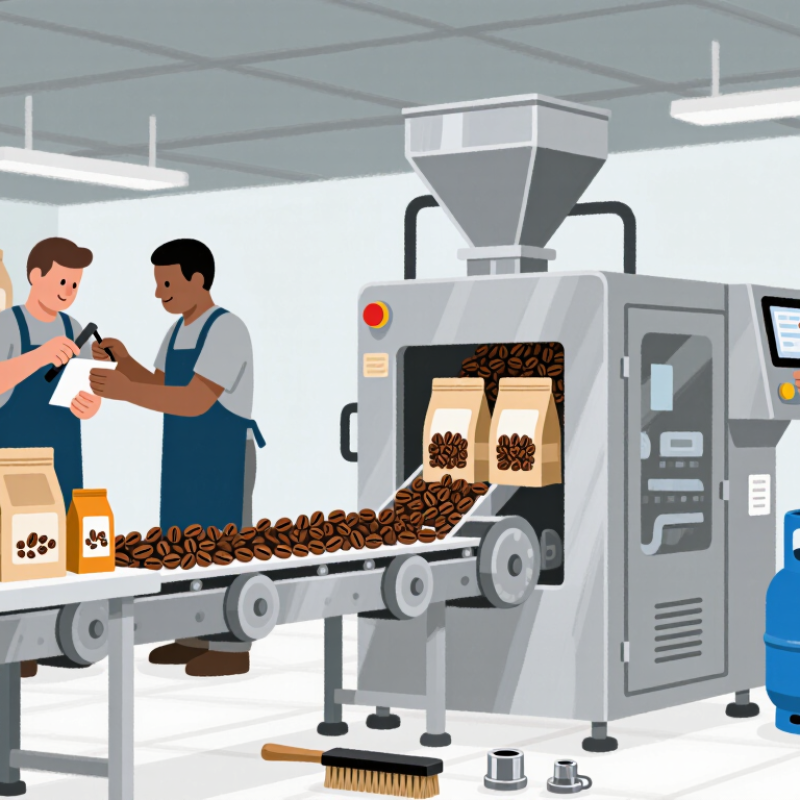
Define the product before comparing machine speeds. Whole beans, ground coffee, and flavored blends can require different dosing systems and sealing settings. Record each bag size, material, closure, and target shelf life. A valve pouch, for example, needs compatible film handling and careful seal checks. Start with the product. Then measure reality.
Set output goals using saleable packs per hour, not the machine’s headline rate. Include filling, sealing, date coding, changeovers, cleaning, and minor stoppages. The National Coffee Association’s Spring 2024 National Coffee Data Trends report found that 67% of U.S. adults drank coffee the previous day. Meanwhile, the International Coffee Organization estimated global coffee consumption at 177 million 60-kilogram bags in 2023/24. These figures signal a large market, but they cannot predict your orders. Build a forecast from your own sales and seasonal peaks.
List current and planned shifts, operators, available floor space, and upstream roasting capacity. If production may grow, ask whether the machine can accept larger dosing systems or faster film rolls later. Not just peak speed. A common planning mistake is sizing for an optimistic forecast while overlooking small batches and frequent changeovers. A simple trial with your actual beans and packaging can expose dust, seal wrinkles, or inconsistent fills. Record the results; assumptions are easy to miss.
Machine choice starts with the package, not the advertised speed. Vertical form-fill-seal machines shape bags from rollstock and suit pillow or gusseted bags. They can reduce packaging-material handling, but format changes may require time and setup. Premade-pouch machines handle stand-up bags with zippers or shaped bottoms. They offer more presentation options, though pouch loading can slow output. Auger fillers suit ground coffee; whole beans usually need accurate multihead weighing. Check the actual weight range, not just the machine’s maximum speed.
Keep the valve in view. Roasted beans release carbon dioxide, so a suitable one-way degassing valve and dependable seals matter. Ask whether the machine can place or accommodate the valve, and test filled bags for leaks. The National Coffee Association’s 2024 National Coffee Data Trends report found that 67% of U.S. adults drank coffee the previous day. That signals a broad market, but it does not identify one preferred pack style. Compare sample runs using your own beans, bag material, target weight, and closure. Watch for bean fragments near the seal. A small detail. It can cause rejects. One planning blind spot is assuming every “compatible” pouch runs equally well; ask for changeover times and test the exact film before committing.
Judge filling accuracy with your own beans, not a brochure’s best-case sample. Roast level, grind size, and degassing can change how beans settle in the hopper. Run several fill weights and compare them with a calibrated bench scale. Record the average and the variation between bags. Small errors add up. The International Coffee Organization’s 2025 Coffee Report and Outlook estimated 2023/24 global consumption at 177.0 million 60-kilogram bags, underscoring why steady output matters as production grows. Still, a global market figure cannot predict your line’s demand; use your own order history to set capacity.
Check speed under real operating conditions. Ask for sustained output with your chosen bag, seal, and target weight, not an empty-machine cycle rate. Observe changeovers, cleaning, and jam recovery. Those minutes count. Automation should reduce repetitive work without hiding faults. Look for clear alarms, accessible settings, and simple checks for weight drift. A basic test: run a full shift, then compare actual saleable bags with the machine’s rated output. A fast filler that creates rework is not fast in practice. I’d also leave room for doubt: one successful trial does not prove reliable performance across different roasts or bag sizes.
Indicative output ranges by automation level (bags per minute)
These broad planning ranges are not guaranteed machine specifications. Actual speed depends on the coffee, bag format, fill weight, and line setup. When evaluating filling accuracy, run trials with your product at the target speed and check filled bags against the agreed weight tolerance. Compare automation features such as automatic weighing, bag handling, sealing, and checkweighing.
A coffee bean packaging machine must suit both the beans and the bag material. Freshly roasted beans release carbon dioxide, while their surface oils can collect in hoppers and dosing parts. Ask whether the machine handles your bag format, such as a flat pouch or a valve bag, and test it with your actual packaging film. A seal that looks neat may still leak. Check seal strength after cooling, not only as it leaves the jaws.
Maintenance details matter during a busy shift. Look for tool-free access to contact parts, clear cleaning instructions, and components that staff can inspect without dismantling half the machine. Coffee dust settles in corners. Ask how often seals, belts, and filters need attention, and whether replacements are easy to source. There is no maintenance-free machine; expecting one is wishful thinking. A simple service log can reveal recurring faults before they stop production.
Safety checks should be specific, not just reassuring words in a sales sheet. Confirm that moving parts are guarded, emergency stops are reachable, and electrical documentation matches the requirements where the equipment will operate. Ask for manuals, risk-assessment information, and evidence of relevant conformity. Standards vary by location, so verify them with a qualified local adviser. It is easy to miss. Include operators in the review; they may spot awkward cleaning access or a hot sealing area that looks fine during a brief demonstration.
A coffee bean packaging machine’s purchase price is only the visible part of its cost. Compare installation, operator training, spare parts, energy use, changeover time, and expected film waste over several years. PMMI’s 2023 State of the Industry report put U.S. packaging machinery shipments at $10.9 billion in 2022, reflecting a substantial equipment market, not a guarantee of savings for any buyer. Ask suppliers to show how their cost assumptions were calculated. Small details matter.
Request a trial using your actual beans, bag sizes, and one-way valve placement. Measure seal rejects, fill-weight variation, and minutes needed to change formats. The International Coffee Organization estimated world coffee consumption at 177 million 60-kilogram bags in 2022/23; steady demand makes reliable output valuable, but your own order pattern should drive machine capacity. Downtime is expensive. Check response hours, technician availability, parts lead times, and whether remote troubleshooting is included. A low quote can become costly when a sensor fails and production waits.
Compare service terms in writing, including travel charges and warranty exclusions. Ask for references from roasters with similar daily volumes, then verify their experience with cleaning and routine maintenance. A spreadsheet can still miss the awkward part: staff may need more time to learn a new interface than the supplier’s estimate suggests. Build a realistic allowance for that learning curve, and revisit the figures after a production trial.
List each product, bag size, material, closure, and target shelf life. Whole beans and ground coffee may need different dosing settings. A valve pouch needs compatible film handling. Start with your actual bags.
Count saleable bags per hour, not just the advertised machine rate. Include filling, sealing, date coding, cleaning, changeovers, and stoppages. Your order history is more useful than a broad market forecast.
Test your own beans at several target weights. Weigh filled bags on a calibrated bench scale, then record average weight and variation. Roast level and grind size can affect how product settles. Small differences matter.
Ask for sustained output with your chosen bag, seal, and target weight. Watch a full shift if possible. Track changeovers, jams, and rework. Those minutes count.
Run actual beans through your planned packaging film. Look for dust buildup, inconsistent fills, seal wrinkles, and leaks. Check seal strength after cooling. A neat-looking seal may still fail.
Check whether contact parts are easy to access and clean. Ask how often seals, belts, and filters need attention. Coffee dust finds corners. No machine is maintenance-free.
Inspect guards, reachable emergency stops, electrical documents, and operating manuals. Confirm local requirements with a qualified adviser. Operators may notice awkward cleaning access that a short demonstration misses.
Review available floor space, shifts, staffing, and roasting capacity. Ask whether dosing systems or film rolls can be upgraded later. I may be overcautious, but optimistic forecasts can hide frequent small-batch changes.
Choosing the right Coffee Bean Packaging Machine starts with a clear understanding of your products, packaging needs, and production goals. Consider the types and volumes of coffee you plan to pack, the package sizes and formats you need, and whether your operation may expand over time. Compare machine designs to confirm they can handle your preferred packaging materials and formats, then assess filling accuracy, operating speed, and automation features to find a practical balance between efficiency and product consistency.
Before making a decision, review the machine’s maintenance needs, ease of cleaning, and applicable safety standards. Compare the full cost of ownership—not just the purchase price—including installation, training, consumables, and ongoing service. Reliable supplier support, access to replacement parts, and a suitable warranty can also affect long-term performance. By weighing these factors together, you can select equipment that fits your workflow today while supporting dependable, cost-effective production in the future.