An Automatic Water Pouch Packing Machine can fill and seal water into flexible pouches, helping producers handle repeatable packaging tasks. Yet machines in this category differ in speed, pouch size, filling accuracy, and the level of operator involvement. Some models suit small production rooms, while others are designed for continuous, higher-volume work. A pouch moves through the machine, receives a measured fill, and is sealed at the edges. Simple to describe. Less simple to choose well.
This Top 10 guide compares machines by practical details, including stated output, compatible film, pouch dimensions, controls, cleaning access, and available technical support. Treat advertised capacity as a starting point, not a guarantee. Actual results can change with pouch material, water conditions, operator setup, and routine maintenance. Ask suppliers for a demonstration using your intended film and target pouch size. Check what the quote includes, such as installation, spare parts, and training. These details can matter as much as the purchase price. There is no universal winner, and glossy specifications can make comparisons look easier than they are. A lower-priced model may fit a modest operation; a faster one may be wasteful if demand is limited. The comparison also has limits: specifications alone cannot show how a machine will perform in your facility. Use the shortlist to guide questions, verify claims with the manufacturer, and match the equipment to your actual daily production needs.
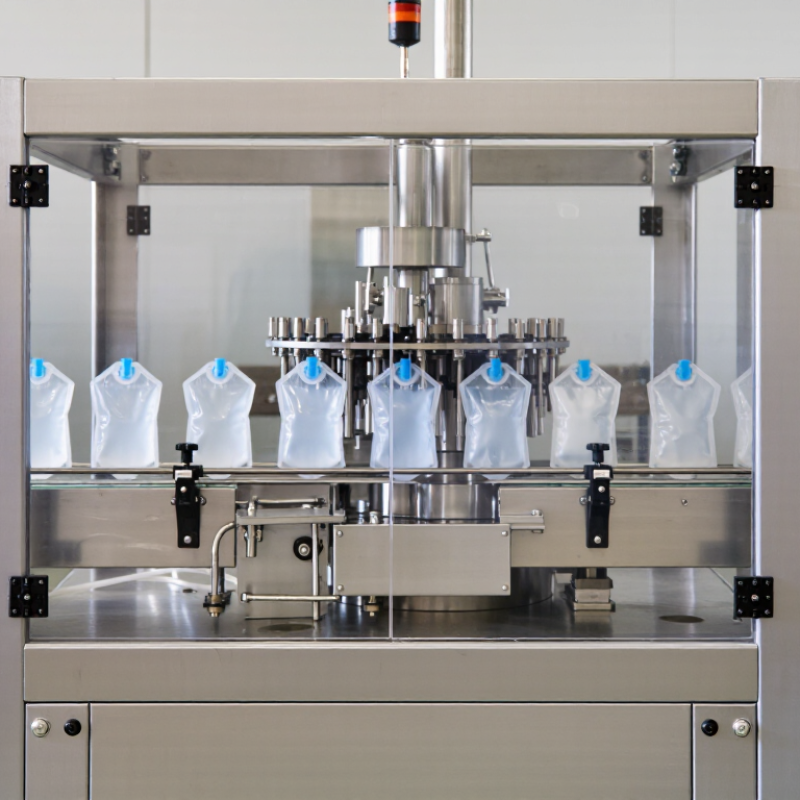
What Is an Automatic Water Pouch Packing Machine?
An automatic water pouch packing machine turns a flat packaging film into sealed, filled sachets. Depending on its design, it forms the pouch, meters treated water, makes heat seals, cuts each pack, and prints a batch code. The finished pouches may be pillow-shaped or have a shaped edge. That is the core. Compared with filling ready-made containers, this setup combines several steps in one line and needs careful coordination between film tracking, filling volume, and seal temperature.
The International Bottled Water Association’s 2024 statistics, citing Beverage Marketing Corporation, report 15.9 billion gallons of bottled-water consumption in the United States in 2023. This figure describes bottled water broadly, not pouch sales, but it shows the scale of packaged-water demand. For buyers, rated speed alone can be misleading: actual output depends on pouch size, film behavior, water temperature, and changeover time. A small seal defect can cause leaks, so check sample packs and seal consistency before approving a machine.
Tips: Ask suppliers to run your intended film and pouch size during a test. Confirm the filling range, cleaning access, date-coding options, and spare-part availability. Leave room for adjustment; real production rarely matches a brochure perfectly.
| No. | Machine Configuration | Typical Pouch Format | Indicative Fill Range | Indicative Output | Typical Film | Best Suited For |
|---|---|---|---|---|---|---|
| 1 | Single-lane vertical form-fill-seal (VFFS) machine | Pillow pouch | 100–500 ml | Approximately 1,000–2,500 pouches/hour | Heat-sealable flexible roll film | Small and medium production runs where a compact, straightforward setup is preferred. |
| 2 | High-speed single-lane VFFS machine | Pillow pouch | 200–1,000 ml | Approximately 2,000–4,000 pouches/hour | Heat-sealable flexible roll film | Higher-volume production of standard water pouches; actual speed depends on pouch size and film. |
| 3 | Two-lane sachet packing machine | Small pillow sachets | 50–250 ml per lane | Approximately 2,000–6,000 sachets/hour total | Heat-sealable flexible roll film | Producing small-format water sachets at a higher combined output than a single-lane setup. |
| 4 | Four-lane sachet packing machine | Small pillow sachets | 50–200 ml per lane | Approximately 4,000–12,000 sachets/hour total | Heat-sealable flexible roll film | Large-volume sachet production where several lanes can run in parallel. |
| 5 | Multi-lane stick-pack machine | Narrow stick pouch | 20–150 ml per lane | Approximately 3,000–15,000 sticks/hour total | Heat-sealable flexible roll film | Compact, single-serving packs; lane count and pouch dimensions affect total output. |
| 6 | Servo-driven VFFS machine | Pillow pouch or shaped pouch, depending on tooling | 100–1,000 ml | Approximately 1,500–4,000 pouches/hour | Heat-sealable flexible roll film | Applications that benefit from adjustable filling and film-feed control; configuration varies by machine. |
| 7 | Premade-pouch filling and sealing machine | Premade flat pouch or stand-up pouch | 100–1,000 ml | Approximately 500–2,000 pouches/hour | Finished premade pouches suitable for the selected sealing method | Operations that require a premade pouch format rather than forming pouches from a film roll. |
| 8 | Automatic spouted-pouch filling and capping machine | Premade pouch with spout | 100–1,000 ml | Approximately 500–2,000 pouches/hour | Premade spouted pouches | Reusable or resealable-style water packaging; pouch and spout compatibility must be confirmed. |
| 9 | Compact VFFS machine with integrated date coder | Pillow pouch | 50–500 ml | Approximately 800–2,000 pouches/hour | Heat-sealable flexible roll film | Smaller facilities that need pouch forming, filling, sealing, and basic date marking in one line. |
| 10 | Automatic water pouch line with infeed and discharge conveyors | Pillow pouch or sachet, according to the packing machine | Typically 100–500 ml for pouch configurations | Depends on the packing machine and line layout | Film matched to the selected packing machine | Continuous production layouts that need coordinated pouch transfer and downstream handling. |
FAQS
It forms pouches from flat film, fills them with treated water, seals them, and cuts them apart. Some models print batch codes.
It combines pouch forming, filling, sealing, and cutting in one line. Film tracking and seal temperature need close coordination.
Check adjustable pouch sizes, stable film tracking, repeatable heat seals, filling accuracy, and clear alarms. Accessible parts make cleaning easier.
Not reliably. Pouch size, film behavior, water temperature, and changeover time can all reduce output. A brochure can flatter.
Run your intended film and pouch size, then inspect sample packs for leaks. Check consistency during a sustained run, not just a brief test.
Record output, rejected pouches, leakage, film waste, and changeover time. Watch startup closely; wasted film can hide there.
Operators need to reach product-contact areas and clear jams without awkward delays. Ask what routine maintenance involves.
Confirm the filling range, date-coding options, spare-part availability, and local service. Leave room for adjustment; production rarely matches a brochure perfectly.
Conclusion
An Automatic Water Pouch Packing Machine is designed to fill measured quantities of water into flexible pouches and seal them for handling and distribution. The process typically involves feeding packaging film, forming it into pouches, filling each pouch with water, sealing the package, and cutting it to size. Coordinated steps help maintain consistent portions and produce neatly finished packs, while controls allow operators to adjust settings for different pouch dimensions and production needs.
The top machines for sale can be compared by their filling capacity, operating speed, sealing performance, ease of use, and maintenance requirements. Some models may suit smaller operations, while higher-output machines are intended for more continuous production. Before choosing, buyers should consider expected daily volume, available floor space, packaging materials, power requirements, cleaning procedures, and access to technical support. A careful comparison of these practical factors can help identify a machine that fits both current needs and future production plans.