0%

Choosing the right Spice Powder Filling Packaging Machine supplier affects production speed, hygiene, accuracy, and long-term operating cost. It is not simply a price comparison. A machine filling turmeric, chili, or cumin must handle fine particles, static electricity, dust, and changing bulk density. Small details matter. An unstable auger can leave visible weight differences across a retail batch.

Industry data supports this investment focus. PMMI’s 2024 packaging machinery outlook reported continued demand for automation, flexible equipment, and solutions addressing labor shortages. Its U.S. Packaging Machinery Shipments Study also placed annual machinery shipments above 11 billion dollars in recent reporting years. These figures show a competitive and expanding equipment market, although results vary by region and product category. Meanwhile, the FAO emphasizes the importance of safe, controlled food processing and traceable supply practices throughout the food chain.

This guide examines leading supplier qualities rather than relying on promotional claims. Strong manufacturers should provide documented filling accuracy, dust-control design, stainless-steel contact parts, accessible cleaning areas, and practical commissioning support. They should also explain whether their systems suit low-volume sampling, high-speed sachets, jars, or premade pouches. A reliable supplier can demonstrate factory testing with the buyer’s actual spice blend. That evidence is more useful than attractive catalog photographs.

There is no perfect machine. A cheaper model may become expensive through powder waste, downtime, or difficult maintenance. Our comparison therefore considers technical capability, service experience, certifications, spare-parts availability, and customer feedback. One limitation deserves attention: supplier performance can change after installation, and published market reports cannot measure every local service problem. Careful verification remains essential.
Top Spice Powder Filling Packaging Machine Suppliers?

What Is a Spice Powder Filling Packaging Machine?

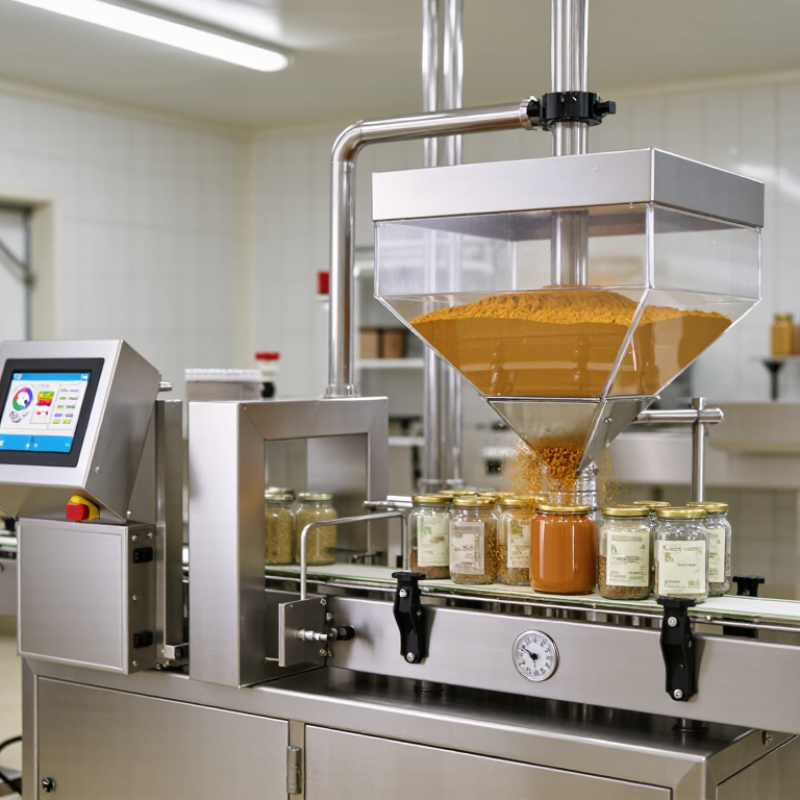
A spice powder filling packaging machine measures dry spices and places them into bags, pouches, jars, or sachets. It usually combines a hopper, dosing system, filling tube, sealing unit, and control panel. An auger often moves powder into each package with controlled rotation.

Powder is rarely uniform. Particle size, moisture, oil content, and grinding quality can change how it flows. That matters. A machine adjusted for fine chili powder may perform differently with coarse pepper or sticky seasoning blends. Accurate suppliers test the actual product before recommending a configuration. They may check fill weight, speed, dust movement, seal strength, and cleaning time.

A reliable machine should offer adjustable dosing, stable sealing temperature, and accessible contact parts. Stainless steel surfaces help with hygiene and routine maintenance. Dust extraction can reduce airborne powder around the filling area. Operators should also verify calibration during production, not only during installation. Small weight errors can become expensive across thousands of packs. Cleaning is not optional. Powder can collect beneath auger flights, inside corners, and around sealing jaws.

When comparing top spice powder filling packaging machine suppliers, buyers should ask for product trials, service records, spare-part availability, and clear performance limits. More automation is not always better. A compact machine may suit a small facility better than a complex line. However, supplier claims still need practical testing. No brochure can predict every powder’s behavior.

Which Features Matter When Choosing a Supplier?

Choosing a spice powder filling machine supplier requires more than comparing machine prices. Grand View Research valued the global food packaging market at approximately USD 562.3 billion in 2023, with continued growth expected through 2030. This expansion increases pressure on suppliers to deliver stable, measurable performance. Ask for verified filling accuracy, not attractive brochure claims.

The machine should handle fine powders, humidity, and changing particle sizes. An auger filler with servo control can improve dosing consistency and reduce product waste. Request test results using your actual turmeric, pepper, or paprika blend. Watch the discharge closely. Does powder bridge inside the hopper? Does dust escape around the pouch opening? These small details often reveal more than a factory demonstration.

Cleanability also matters. The Powder and Bulk Solids industry frequently highlights dust control, sanitation, and operator safety as practical priorities. Choose suppliers offering tool-free contact-part removal, sealed drives, and clear cleaning procedures. PMMI industry reports also identify labor availability and automation as major packaging concerns. Therefore, inspect the control system before purchasing. Can a new operator adjust it safely? Is remote support genuinely responsive? A supplier should provide spare-parts guidance, commissioning records, and operator training. Service promises can sound excellent. Some are not. Check references from plants using similar powders, and review downtime data over several months, not one successful production day.

Top Spice Powder Filling Packaging Machine Suppliers: Which Features Matter Most?

This 100-point procurement model prioritizes the features that most directly affect spice powder packaging performance. Filling accuracy, dust control, cleanability, and after-sales support should be reviewed before comparing machine price or production speed.

How Do Leading Suppliers Compare by Machine Type?

Top Spice Powder Filling Packaging Machine Suppliers?

Leading suppliers differ mainly by the machine types they engineer, test, and support. Auger fillers suit turmeric, chili, cumin, and other fine powders with stable bulk density. They offer accurate dosing, but dusty products require sealed auger housings and effective dust extraction. Vertical form-fill-seal systems combine dosing, pouch forming, and sealing in one line. This reduces floor space and labor, although film tension can affect seal quality. Premade-pouch machines create a cleaner presentation and handle resealable formats well. They usually require a higher initial investment.

According to PMMI’s 2024 State of the Industry report, packaging machinery shipments in the United States exceeded 10 billion dollars in 2023. That demand reflects stronger automation needs, especially where labor availability limits production capacity. For suppliers, the real comparison is not only speed. It includes changeover time, weighing repeatability, spare-parts access, and operator training. Rotary auger systems can serve high-volume production, while linear fillers may suit smaller batches and frequent flavor changes. I have seen buyers overvalue advertised speed. Dust buildup and inconsistent powder flow can erase those gains. A supplier should provide factory trials using the customer’s actual spice blend, container, and target weight. The trial should record accuracy, reject rate, cleaning time, and sealing performance. European and North American equipment reports also emphasize hygienic design and automation as continuing investment priorities. Still, every supplier’s test data needs scrutiny. A polished demonstration may not represent humid powder, rough handling, or daily sanitation.

Top Spice Powder Filling Packaging Machine Suppliers? - How Do Leading Suppliers Compare by Machine Type?

Machine Type Typical Package Format Typical Filling Range Typical Output* Typical Accuracy* Main Sealing Method Best Suited For Key Supplier Evaluation Criteria
Auger Filler Preformed pouches, jars, bottles, cans Approximately 5–5,000 g, depending on auger size and hopper design Approximately 10–60 fills/minute Commonly ±1–2% of target weight under stable conditions Heat sealing, induction sealing, or cap closing through an integrated line Ground spices, powdered herbs, seasoning blends, and other free-flowing powders Auger design, screw-change flexibility, dust control, load-cell feedback, and cleaning access
Vertical Form-Fill-Seal (VFFS) Pillow bags, gusseted bags, and block-bottom-style bags Approximately 5–2,000 g, depending on the forming tube and auger system Approximately 30–90 bags/minute for standard spice pouches Commonly ±1–2% of target weight with controlled powder flow Continuous or intermittent heat sealing High-volume retail packs using roll-fed laminated or heat-sealable film Film compatibility, registration control, dust extraction, changeover time, and seal consistency
Premade Pouch Filling Machine Stand-up pouches, flat pouches, zipper bags, and spouted pouches Approximately 10–2,000 g, depending on pouch size and filler configuration Approximately 20–60 pouches/minute Commonly ±1–2% of target weight Heat sealing after pouch opening and filling Premium packaging, multiple pouch sizes, zipper formats, and frequent product changeovers Pouch-width range, pouch detection, zipper handling, reject control, and integration with multihead or auger fillers
Sachet Packing Machine Three-side-seal or four-side-seal single-dose sachets Approximately 0.5–100 g per sachet, depending on the model Approximately 30–120 sachets/minute; multi-lane models may produce more Commonly ±1–3% of target weight for small powder doses Heat sealing with optional tear notch and date or batch coding Samples, food-service portions, trial packs, and low-weight consumer sachets Lane configuration, film tracking, anti-static control, powder-dust management, and coding accuracy
Bottle or Jar Filling Line Plastic or glass jars, bottles, and containers with caps Approximately 20–5,000 g, depending on container size and filler capacity Approximately 15–80 containers/minute Commonly ±1–2% by weight; volumetric accuracy varies with powder density Cap application, screw capping, induction sealing, or liner sealing Rigid retail containers, refill packs, food-service products, and premium spice ranges Container handling, cap-feeding reliability, dust extraction, weight verification, and line synchronization
Semi-Automatic Auger Filler Manually positioned pouches, jars, bottles, and containers Approximately 5–5,000 g, depending on auger and hopper configuration Approximately 5–25 fills/minute Commonly ±1–3% of target weight under consistent operating conditions Usually requires separate manual or standalone sealing equipment Start-ups, small batches, contract packing, and products with many SKU changes Ease of operation, recipe storage, hopper cleaning, footprint, and upgrade options

*Output and accuracy figures are typical industry ranges for spice powders and depend on powder density, particle size, moisture, flowability, package dimensions, film, operator settings, and the selected machine configuration. Actual performance should be confirmed through a product test and factory acceptance trial.

What Industries Use Spice Powder Filling Equipment?

Spice powder filling equipment serves far more than retail seasoning producers. Snack manufacturers use it for chili, paprika, garlic, and barbecue blends. Ready-meal plants fill curry bases, soup sachets, and rice-seasoning pouches. Bakery and processed-meat facilities also dose small amounts into dry mixes. MarketsandMarkets estimates the global spice market could grow from USD 18.2 billion in 2023 to USD 25.1 billion by 2028. This growth increases demand for repeatable dosing.

Nutraceutical manufacturers use auger fillers for powdered turmeric, ginger, and botanical blends. Their priorities differ. They often require batch records, calibrated scales, and enclosed dust control. Cosmetic producers may fill clay, mineral, or exfoliating powders, although their sanitation risks differ from food plants. PMMI’s 2024 State of the Industry report highlights automation, traceability, and labor reduction as continuing investment drivers in packaged goods. In practice, a filler must match particle size, oil content, and humidity. A free-flowing salt blend behaves unlike sticky garlic powder.

Operators should test real product, not a substitute powder. That sounds obvious. It is often missed. A practical trial checks fill weight, dust escape, auger speed, and cleaning time. Food plants also need tool-free access and materials suitable for repeated washdown. No machine performs perfectly across every recipe. Even a strong specification can overlook caking during a humid shift. That weakness deserves measurement before equipment selection.

How Can Buyers Evaluate Quality, Service, and Pricing?

Top Spice Powder Filling Packaging Machine Suppliers: How Can Buyers Evaluate Quality, Service, and Pricing?

Quality should be tested with your actual spice powder, not a polished showroom sample. Request a factory acceptance test using different particle sizes, moisture levels, and target weights. Record fill accuracy, dust leakage, changeover time, and rejected packs. PMMI’s 2024 State of the Industry report valued U.S. packaging machinery shipments at about $10.2 billion in 2023, showing a mature but highly competitive market. A large supplier is not automatically the safest choice.

Service needs measurable promises. Ask for installation time, remote response hours, technician availability, and critical spare-part locations. Request training records and a written maintenance schedule. ISO 9001 certification supports process control, but it does not guarantee excellent field service. Check references from factories handling similar powders. Talk to operators, not only sales staff. Their comments may reveal difficult cleaning points or unstable sensors.

Pricing requires a total-cost view. Compare the machine, dosing system, dust extraction, molds, commissioning, training, spare parts, and software support. A lower quotation may exclude electrical integration or future format changes. The International Society of Automation notes that lifecycle costs can significantly exceed initial equipment prices in automation projects. That warning deserves attention. Buyers sometimes overvalue speed and undervalue cleanability. I would also challenge my own test results: one successful trial proves little. Require repeated runs, documented tolerances, and a clear remedy when performance falls short.

FAQS

What does a spice powder filling packaging machine do?

It measures dry spices and fills bags, pouches, jars, or sachets. An auger moves powder into each package. The machine usually includes a hopper, filling tube, sealing unit, and control panel.

Why can different spice powders require different machine settings?

Particle size, moisture, oil content, and grinding quality affect powder flow. Fine chili powder may behave differently from coarse pepper. Sticky seasoning blends can bridge inside the hopper. One setting rarely suits every product.

Which features should buyers check before purchasing?

Look for adjustable dosing, stable sealing temperature, and accessible contact parts. Stainless steel surfaces support routine cleaning. Dust extraction can reduce airborne powder near the filling area. Servo-controlled augers may improve dosing consistency.

How can a buyer test machine performance?

Request trials using the actual turmeric, pepper, or paprika blend. Check fill weight, operating speed, dust movement, and seal strength. Watch whether powder escapes around the pouch opening. A factory demonstration is not enough.

How important is filling accuracy during production?

Operators should verify calibration throughout production, not only during installation. Small weight errors multiply across thousands of packages. Use regular weight checks beside the filling machine. Perfect accuracy should not be assumed.

What cleaning details deserve attention?

Powder can collect beneath auger flights, inside corners, and around sealing jaws. Choose contact parts that can be removed without tools. Clear cleaning procedures reduce missed residue. Cleaning is not optional.

Is more automation always the better choice?

More automation is not always better. A compact machine may suit a small facility and simpler workflow. Complex equipment can increase training and maintenance demands. Consider actual labor, space, and production volume.

What service support should a supplier provide?

Ask for spare-parts guidance, commissioning records, operator training, and responsive technical support. Review service records and downtime data over several months. Check references from facilities using similar powders. Promises can sound excellent. Verify them.

Conclusion

A Spice Powder Filling Packaging Machine is designed to accurately measure, fill, seal, and package powdered seasonings such as pepper, chili, turmeric, and mixed spices. When choosing a supplier, buyers should evaluate filling accuracy, packaging speed, compatibility with different powder textures, dust-control performance, ease of cleaning, automation level, and flexibility for various bag or container formats. Reliable safety features and durable, food-contact materials are also essential for stable daily operation.

Leading suppliers may offer auger fillers, vertical form-fill-seal systems, premade pouch machines, or integrated weighing and packing lines. These solutions are used across spice processing, food manufacturing, catering supply, retail packaging, and ingredient distribution. To compare suppliers effectively, buyers should review machine quality, production capacity, customization options, installation support, operator training, spare-parts availability, warranty coverage, and long-term maintenance costs. A slightly higher initial investment may provide better reliability, lower waste, and stronger overall value.

Elara

Elara

Elara is a professional marketing specialist dedicated to helping businesses understand products, markets, and customers through clear, practical, and insight-driven communication. With extensive knowledge of the company’s solutions, she translates complex features and industry trends into useful......